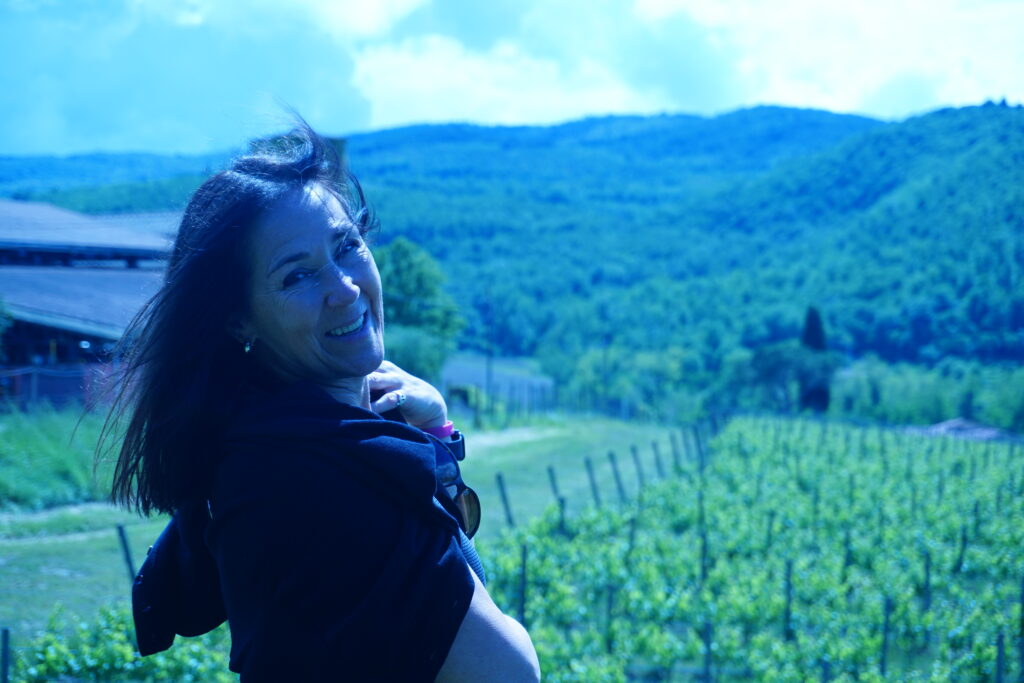
This year’s birthday trip was originally meant to be Morocco. I had been looking forward to it for months—days spent traveling through Casablanca and beyond, immersing myself in a completely different rhythm of life, culture, and color.
But sometimes life redirects us without asking.
When the tour company canceled, I was left unexpectedly searching for a new destination for my birthday. At first, it felt like a disappointment. In hindsight, it feels like something else entirely: a quiet rerouting toward something I didn’t yet know I needed. Somehow, everything happens for a reason.
Because instead of Morocco, I found myself heading back to Italy—this time to Tuscany—where I could finally use the Italian I’ve been learning for the past ten months. And that alone felt like a gift.
Counting Italy
A colleague recently asked me how many times I’ve been to Italy. I paused, genuinely unsure. I started counting on my fingers—one, two, three, four, five… I think this makes six.
Every previous visit included Rome in some way. This time was different. I passed through Rome and continued onward to spend eight days in the Tuscan region, based in Montecatini Terme on a Cosmos Gourmet Tuscany tour.
And then came the question that I’d never considered:
“What is it about Italy that keeps you returning?”
The answer arrived immediately.
It is my heritage. A sense of connection I can’t quite put into words. It’s the people, their style and way of life, the language, the architecture, and the unmistakable romance that seems to live in the air itself.
Connections Along the Way
Arriving in Florence felt surreal. After the long journey from Miami to Rome and finally into Florence, I expected a bustling international airport with endless terminals and intimidating customs lines. Instead, Florence Airport felt almost… charmingly tiny. I remember thinking, Wait… this is it?
And then came border control.
Or what I thought would be border control.
After years of traveling, I’m conditioned to expect twenty questions:
“How long are you staying?”
“Where are you staying?”
“What’s the purpose of your visit?”
“Did you pack your own bags?”
In Florence? If you have nothing to declare, you basically just keep walking. I blinked twice and suddenly found myself standing in Italy wondering, Did I accidentally skip a step?
I was fully prepared for my first real Italian moment with our shuttle driver. I had practiced confidently saying:
“Sono Theresa.”
I was READY.
Instead, I walked up to the driver and before I could deliver my carefully rehearsed line, he smiled and simply said:
“Theresa?”
Well… there went my dramatic Italian arrival.
Just as it did on my trip to Peru, travel worked its magic almost immediately. I connected with two women from Kentucky—K and B—and the three of us clicked instantly. They were adventurous, funny, independent, and exactly the kind of travel companions you hope fate assigns you.
The laughs started early and never really stopped.
We joked about somehow being the “young crowd” of the tour.
Then there was B’s luggage situation.
Somewhere between Scotland and Italy, her suitcase decided to begin its own independent European vacation. Unfortunately for B, there was only one flight a week from Edinburgh, meaning her luggage wouldn’t arrive until essentially the day before she left Florence. I think it actually arrived two days before her departure.
At first, we were horrified for her.
Then we were laughing with her while watching her unexpectedly become an expert in emergency Italian shopping.
Honestly, by the end of the trip, her lost luggage became the question of the day and one of the running jokes of the tour.
And like every seasoned traveler eventually learns:
Pack at least one outfit in your carry-on.
Or better yet… become one of those mysterious, emotionally evolved people who travel with only a carry-on.
I’m not there yet spiritually.
Once again, I arrived fully prepared for what had become one of my favorite parts of the journey: my brave little Italian conversations. I had practiced my line over and over in my head like an actress waiting for her cue:
“Studio italiano. Posso parlare italiano con Lei?”
(“I study Italian. May I speak Italian with you?”)
The moment I said it to Giulia at the hotel reception desk, her entire face lit up. Not a polite-for-the-tourist kind of lit up—genuinely excited. Suddenly, what could have been a routine hotel check-in turned into this warm, joyful exchange between two people trying to connect through language.
And honestly? I felt ridiculously proud of myself.
Not because my Italian was perfect (trust me, it was not), but because I had crossed that invisible line between studying a language and actually living it.
That feeling followed me throughout the entire week.
Every conversation became a little adventure. I found myself chatting in Italian whenever I could, piecing together menus, asking questions, and even eavesdropping—purely for educational purposes, of course—on nearby conversations and realizing with amazement that I could actually understand the basic gist of what people were saying.
Again and again, the reaction from locals was the same: excitement, encouragement, and genuine warmth. My tour guides and local specialists seemed delighted that I was making the effort. Instead of switching immediately to English, many leaned into the experience with me, helping me, gently correcting me, and cheering me on.
At one point, my tour operator even began introducing me to people by proudly announcing that I was learning Italian—which both delighted me and instantly raised the pressure on my conversational abilities.
No pressure at all.
But that became one of the most unexpected joys of Tuscany: discovering that language opens doors far beyond communication. It creates connection. It turns simple encounters into memorable moments. And somehow, every “brava!” I received made the entire experience feel even richer, warmer, and more deliciously Italian.
Living Tuscany
Our home base in Montecatini Terme became a doorway into the Tuscan countryside. Each day unfolded into a new postcard: Vinci. Greve in Chianti. Bolgheri. Castagneto Carducci. Lucca.
Rolling hills, the scent of jasmine and ginestra (broom plant) everywhere we went. The smell of grapes fermenting in wine cellars. The taste of fresh olive oil. Scenery that reminded me of the Pennsylvania countryside. Cool mornings and evenings, warm sunny afternoons, and blue skies stretching endlessly overhead.
We were very fortunate with the weather, as the week before had been cold and rainy.
Every day included wine tastings and what quickly became my favorite phrase on this tour: “light lunch.”
Now, a Tuscan “light lunch” is not exactly what Americans imagine when they hear the word light. It meant charcuterie boards with capocollo, salami, wedges of sharp pecorino, warm focaccia glistening with olive oil and a sprinkle of sea salt—simple, rustic, and somehow perfect in every possible way.
One stop introduced us to a delicacy that initially made me hesitate: lardo. Yes… literally cured pork fat. Every time I heard the word, I immediately thought of Crisco and wondered who on earth decided this was a good idea.
But Tuscany has a way of humbling your assumptions.
What makes lardo so special is not just the ingredient itself, but the centuries-old process behind it. Thick cuts of pork fat are cured for months in enormous basins carved from the famous white marble of Carrara. The marble keeps the temperature naturally cool while the lardo slowly absorbs salt, rosemary, garlic, pepper, and mountain herbs. Over time, it transforms into something silky, delicate, and almost buttery, melting instantly on warm bread.
It sounds excessive. It sounds impossible. And yet there I was in the middle of Tuscany thinking, I could happily eat this “light lunch” every single day for the rest of my life.
Not everyone on the tour shared my enthusiasm. Some people seemed to hit their cold-cut limit rather quickly. Meanwhile, I was mentally preparing adoption papers for an entire wheel of pecorino and a lifetime supply of focaccia.
While sitting on a bench in Vinci, I struck up a conversation with one of the women on our tour—a New York City retiree and what sounded like a fully formed Italian daydream. At one point she casually mentioned buying a place in Italy and moving there someday. Naturally, I had questions.
“How would you fill your days?”
“Would you miss NYC?” I asked.
Without missing a beat, she exclaimed, “No,” and painted an entire life for me: buying a fixer-upper, decorating it room by room, planting a garden, meeting neighbors, inviting people over for long dinners filled with food, wine, and conversation.
Honestly, within five minutes I was halfway ready to make this dream a reality myself.
That dream became an ongoing theme throughout the week. Between excursions, pasta, and panoramic views, we kept returning to the topic—retirement in Italy, health care concerns, building community, and figuring out what life looks like when work is no longer the center of your identity.
In many ways, our conversations became my own unofficial retirement education. I can barely imagine not working every day, and the idea of suddenly having “free time” feels both luxurious and slightly terrifying.
Another day in the heart of Tuscany brought us to Greve in Chianti, one of those postcard-perfect towns that makes you wonder if Italians are simply born knowing how to make everything beautiful. We spent the afternoon wandering local shops before enjoying a light lunch and Chianti tasting at a charming wine cellar tucked away from the heart of the piazza.
Now, I wouldn’t call myself a wine drinker, but I’ve known since my very first trip to Italy that I love Chianti. Apparently, my wine preferences are highly specific and geographically loyal.
Later we visited a Tuscan estate famous for its Chianti production, surrounded by rolling vineyards and the kind of scenery that almost forces you to romanticize your life decisions.
But the true highlight of the trip was our cooking class at La Piaggia, Altopascio—Lucca and Viareggio, a rustic Tuscan farmhouse and agritourism estate tucked into the countryside.
This day began leisurely in Montecatini Terme, where I wandered the charming streets before taking the funicular up to Montecatini Alto for breathtaking views of Tuscany stretching endlessly into the distance. The ride instantly reminded me of Pittsburgh’s Duquesne Incline and Monongahela Incline, and I couldn’t help thinking about how many Italians eventually settled in Pennsylvania. The similarities suddenly felt obvious—hills, farmland, physical labor, mining, building infrastructure. You could almost trace the connection between the landscapes.
Then came the cooking class—and this was no sterile “demonstration kitchen” situation.
Once we arrived at the farmhouse, we were welcomed with drinks before heading into the orchard to observe the vegetables, lemons, and olives grown for the cooking classes, used as part of the estate’s food supply and sold in their little corner shop.
We learned about traditional Italian delicacies, rolled up our sleeves, and fully embraced the hands-on chaos of Italian cooking.
There is something magical about making pasta in the Tuscan countryside with flour on your clothes, olive oil on your hands, and people around you laughing through language barriers.
That evening, we sat down together to enjoy the meal we had prepared ourselves—fresh, simple Frantoiana soup, fettuccine, and tiramisù shared with traveling companions who somehow already felt like old friends.
And honestly, that may be the real secret ingredient in Italy: connection.
On my final day in Tuscany, I traded vineyards and medieval streets for something far more dramatic—the otherworldly marble quarries of Carrara, carved into the rugged peaks of the Apuan Alps like giant slices of moonlight.
Standing there, surrounded by mountains literally cut open by centuries of excavation, I could hardly comprehend the scale of it all. Massive white walls of marble shimmered against the blue sky, and every corner felt like a collision of nature, artistry, and human ambition.
I kept thinking about how much my dad would have loved this experience—the engineering, the history, the sheer impossibility of it. It was one of those places that makes you feel both incredibly small and deeply connected at the same time.
As if Tuscany wanted to send us home on the highest possible note, the afternoon turned into a delicious masterclass with the hotel’s Michelin-starred chef, who entertained us with stories, laughter, and demonstrations of classic Tuscan desserts.
Watching him effortlessly create cantuccini, a rustic apple cake, and a dreamy ricotta-and-cream cake felt like culinary theater. And yes—the best part was that we got to devour the desserts later at our farewell dinner that evening.
Because in Italy, apparently even saying goodbye comes with wine, applause, and cake.
What Stayed With Me
What made me smile every single day was simple:
Waking up in Italy.
Speaking Italian, however imperfectly.
Cool mornings and evenings.
The warm days.
Blue skies that seemed to stretch endlessly.
And a feeling of being gently held by place and time.
I miss it already—the rhythm, the language, the cobblestones, the ease of it all.
Somehow, Italy keeps calling me back.
And I think I keep answering.
Discover more from A Single Girls Travels
Subscribe to get the latest posts sent to your email.
Happy birthday !
Not sure if I erased my last message so here goes again.
I enjoyed reading your blog. You write so well that it really paints a picture for us. I wish I was with you. What a fabulous trip! You deserve all that beauty and happiness. Tanti Auguri!!
Lovely 💖